
Home Minister Rajnath Singh on Thursday blamed Pakistan for the bail granted to Mumbai terror attacks mastermind Zakiur Rehman Lakhvi, saying there might be some shortcomings on the part of the prosecution in taking forward the case.

India questioned the functioning of Pakistan's notorious military courts.

What distinguishes 26/11 from other bombings in big cities, for instance 9/11 in New York or 7/7 in London, is that it remains the best-documented attack in a digitally enhanced world, says Sunil Sethi

The Indian Army, the Border Security Force, Hindu temples and the people of India, all have been targetted by fidayeen from Pakistan.
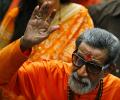
Pakistani-American terrorist David Headley, convicted in the US for his role in the 26/11 Mumbai attacks, on Thursday told a court in Mumbai that terror outfit Lashkar-e-Tayiba wanted to eliminate Bal Thackeray but the person who was assigned the job to kill the late Shiv Sena chief was arrested.

Experts trace the reasons for the 26/11 attacks to the Pakistan's military interest in three key areas: Kashmir, Afghanistan and nuclear armaments.

Saroj Kumar Rath, author of the newly-published book Fragile Frontiers: The Secret History of Mumbai Terror Attacks, speaks to Rediff.com's Vicky Nanjappa.

Even as France mourns the bloodiest terrorist attack for 20 years, let's take a look at some major standoffs witnessed in the past:

Zakir Naik, a gentle, rockstar televangelist, is dangerous as young Muslims may be swayed by his fundamentalist interpretations of Islam and justify victimhood and extremism, says Shekhar Gupta.
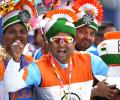
The win at Edgbaston was not the first time an Indian team had vanquished Pakistan in an ICC competition. Rajneesh Gupta surveys the landscape of India-Pakistan encounters in ICC contests.
